Concrete Permits in Riverton, UT: A Complete Homeowner Guide
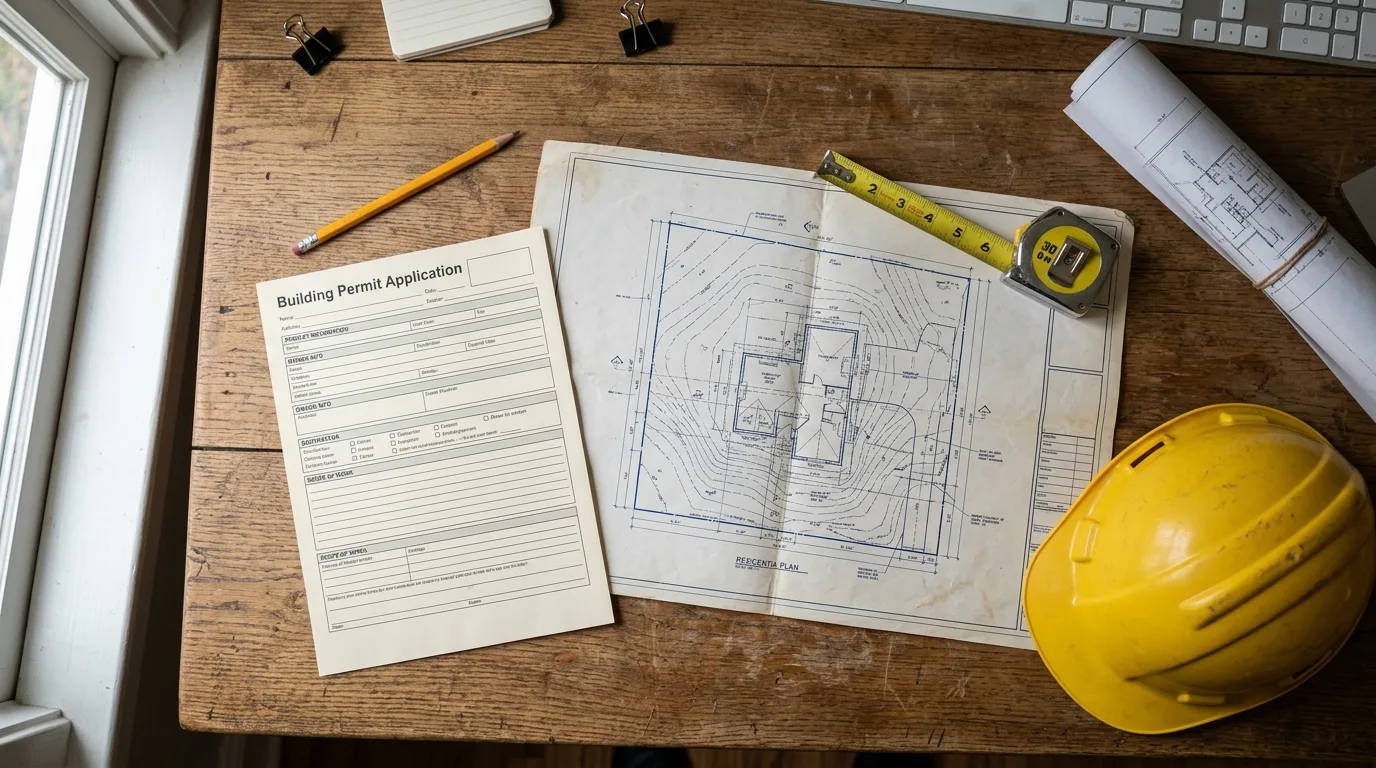
If you’re planning concrete work on your Riverton property, understanding permit requirements is essential before you start. The rules aren’t complicated once you know what applies — but starting work without the right permits in Riverton can result in stop-work orders, fines, or required demolition. This guide covers what you need to know.
Need Permit Guidance for a Riverton Concrete Project?
Riverton Concrete coordinates all permit requirements. Call (888) 376-0955 to discuss your project.
Why Permits Matter for Concrete Work in Riverton
Building permits are required by Utah state law and Riverton City ordinance to protect life safety — and the city takes this seriously. Riverton’s official building page notes explicitly: “Failure to obtain a permit is a class B misdemeanor punishable by law.” Beyond the legal risk, work done without required permits can complicate home sales (inspectors routinely flag unpermitted improvements), may void homeowner insurance coverage for incidents related to the unpermitted work, and can result in required demolition if discovered.
The good news: most residential concrete work in Riverton does not require a permit. The rules are straightforward once you understand the basic distinctions.
What Concrete Work Requires a Permit in Riverton
Structural concrete: All concrete that supports loads from structures above it requires a building permit. This includes:
- Residential foundations (slab-on-grade, footings, basement walls)
- Garage slabs for attached or detached garages
- Footings for any accessory structure (sheds, workshops, ADUs, covered patios)
- Concrete retaining walls over certain heights
- Any concrete associated with a new home or addition
Soils report requirement: Riverton City requires a lot-specific soils report on all new single-family dwelling and commercial building permits. This requirement reflects the city’s recognition of Salt Lake County’s expansive clay soil conditions. We coordinate soils report procurement as part of every foundation project.
Land Disturbance Permit: Required for new construction including accessory structures, additions, in-ground pools, and walkouts that disturb the land surface. This is a separate permit from the building permit and applies to many concrete projects that would otherwise be permit-exempt on their own.
What Concrete Work Generally Does NOT Require a Permit in Riverton
Driveways: Concrete driveways without attached roof structures are generally exempt from building permits in Riverton. Utah’s Mountain Safety District (MSD) guidelines indicate that driveways and patios without roof coverings do not require a building permit.
Patios: Open concrete patios without attached covered structures are generally permit-exempt.
Sidewalks and walkways: Residential sidewalks and walkways not connected to structural elements are generally exempt.
Concrete repair and resurfacing: Surface maintenance including crack filling, resurfacing, and sealing does not require permits.
RV and boat parking pads: Standalone concrete pads for vehicle parking without attached structures are generally exempt. Adding a carport or covered structure over the pad would require a permit.
Important caveat: These exemptions apply to the concrete work itself. If your project involves significant ground disturbance, grading changes, or work within a certain distance of property lines or utility easements, additional review may apply. Always confirm with Riverton City Building Department for your specific project before beginning work.
How to Get a Concrete Permit in Riverton
Step 1 — Determine if your project requires a permit: Based on the scope described above. When in doubt, call Riverton City’s Building Department at (801) 208-3120 or visit www.rivertonutah.gov/building/.
Step 2 — Gather required documents: For structural concrete, you’ll need plans showing the foundation design, a soils report from a licensed geotechnical engineer, and in some cases a structural engineer’s stamp. We can coordinate all of these.
Step 3 — Submit the permit application: Applications are submitted to Riverton City’s building department. Online submission is available for many permit types. Plan review times vary — simple projects may be approved in 1 to 2 weeks; complex structural projects may take longer.
Step 4 — Schedule inspections: Most structural concrete permits require inspections at specific stages — typically before pouring (to inspect reinforcement) and after finishing. We coordinate all required inspections as part of our permitted work.
We Handle Riverton Permits So You Don't Have To
Call Riverton Concrete at (888) 376-0955 for full-service concrete work including permit coordination.
Practical Tips for Riverton Concrete Permits
-
Start early: Permit processing adds 1 to 4 weeks to project timelines. Factor this into your planning, especially if you’re coordinating with construction or landscaping.
-
Don’t start without a permit: Starting structural work before permit issuance is the most common compliance mistake in Riverton. A stop-work order means you pay for demobilization and remobilization on top of potential fines.
-
Keep your permit and approved plans on-site: Inspectors in Riverton require approved plans to be available at the job site during inspections.
-
HOA approval may also be required: Many Riverton communities have HOA Architectural Review Boards (ARBs) that require approval for visible exterior changes including concrete driveways and patios. HOA approval is separate from city permits and often has longer timelines. Check your HOA rules before submitting a permit application.
-
Contractor licensing: Verify that your concrete contractor holds the appropriate Utah contractor license. A licensed contractor can pull permits on your behalf and takes responsibility for code compliance.
Frequently Asked Questions
Who is responsible for pulling the permit — me or the contractor?
Either can pull the permit. When a licensed contractor pulls the permit, they take on legal responsibility for code compliance — which is generally the preferred approach for structural work. For minor work, homeowners can pull their own permits as owner-builders.
Can I get in trouble for concrete work done without a permit years ago?
Unpermitted work can be flagged during a home sale or permit application for other work. Some jurisdictions allow retroactive permits; others require demolition. Riverton handles these on a case-by-case basis. If you’re aware of unpermitted structural concrete work on your property, consult with Riverton’s building department before listing the home for sale.
Does a concrete contractor need to be licensed in Utah to pull permits in Riverton?
Yes. Utah requires contractor licensing for projects over $3,000 in value. The contractor must hold an active Utah license and provide it when pulling permits. We are fully licensed and handle all permit coordination as part of our structural concrete services.
Start Your Permitted Riverton Concrete Project
Call Riverton Concrete at (888) 376-0955 for permit coordination and expert concrete installation.
Related: