Best Time of Year to Pour Concrete in Utah: A Riverton Guide
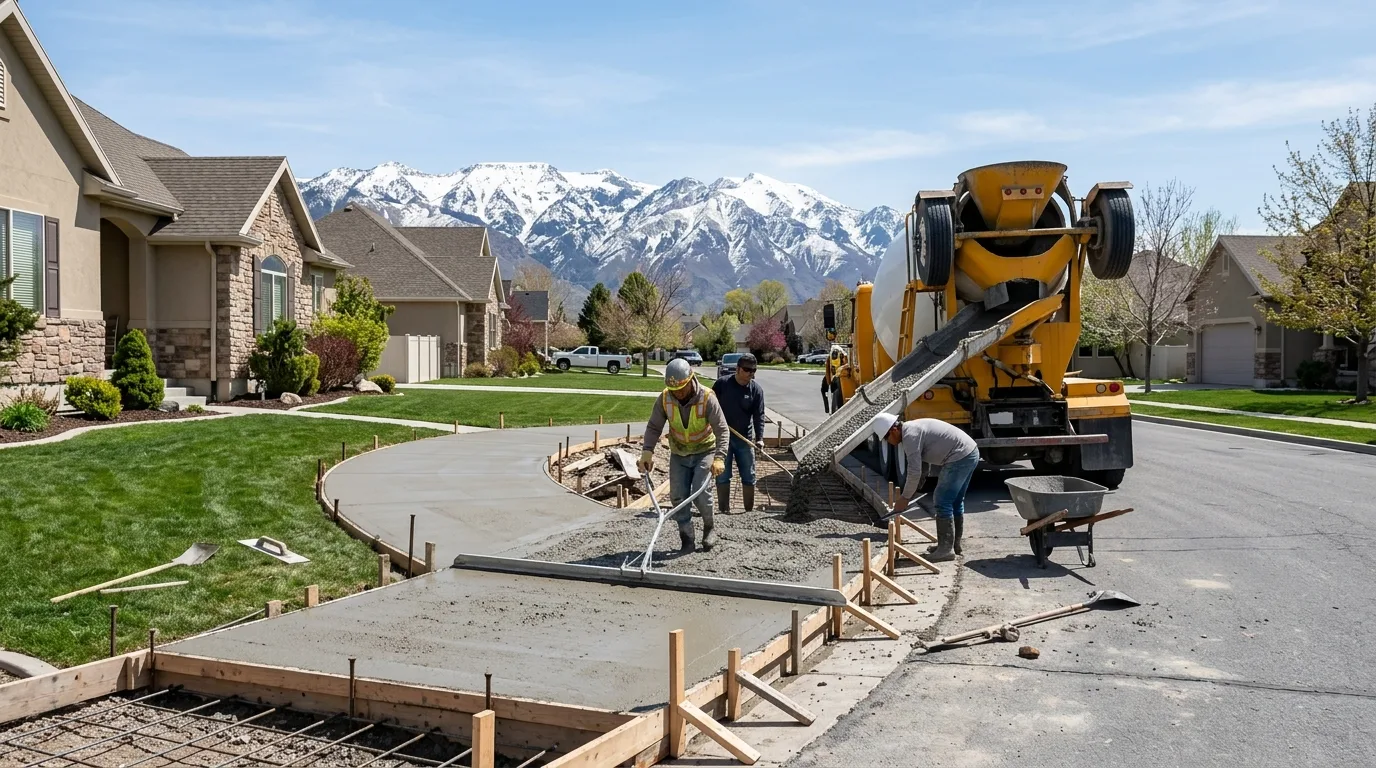
Timing matters more for concrete work in Utah than in most states. Riverton’s high-elevation climate — combined with rapid temperature swings and four distinct seasons — creates windows that favor concrete work and periods that require careful planning or carry real quality risk. This guide gives you the month-by-month picture so you can schedule your project for the best possible outcome.
Schedule Your Riverton Concrete Project
Call Riverton Concrete at (888) 376-0955 — we'll help you pick the right window for your project.
Why Timing Matters for Concrete in Riverton
Concrete curing is a chemical process — the hydration of cement particles — that proceeds optimally within a specific temperature range. When temperatures are too low, hydration slows dramatically; when they fall below freezing, free water in the mix can freeze before it reacts, permanently reducing the concrete’s strength. When temperatures are too high, rapid evaporation causes surface moisture to escape before the cement can hydrate properly, leading to surface cracking and reduced strength.
Riverton sits at 4,439 feet elevation, which amplifies both problems. Low atmospheric pressure at elevation means water evaporates faster than it would at sea level — a summer pour in Riverton can experience the same evaporation rate as a pour at 3,000 feet at a significantly lower temperature. This makes evaporation management especially important in Riverton’s July and August heat.
Types of Conditions by Season in Riverton
Spring (April–June): The best concrete season in Riverton. Temperatures typically range from 50°F to 80°F with low freeze risk after mid-April. Afternoon highs allow concrete to cure at the ideal rate, while cool nights slow evaporation without dropping to dangerous levels. Contractor availability is highest in April and May before summer demand peaks.
Summer (July–August): Challenging. Average highs reach 93°F and occasionally exceed 100°F. Rapid evaporation at Riverton’s elevation can cause surface cracking within minutes of finishing if protective measures aren’t taken. Experienced crews pour in early morning, use evaporation retarder additives, and apply wet burlap or curing blankets immediately after screeding. Quality is achievable but requires active management.
Fall (September–October): The second-best window. Temperatures between 50°F and 75°F with stable conditions. Freeze risk is low until mid-October in Riverton. Fall pours cured before November’s freeze-thaw season begins perform as well as spring pours.
Late Fall / Early Winter (November–December): Transitional. Freeze risk begins in earnest in November. Concrete poured when overnight lows are below 40°F requires insulating blankets to prevent early freeze damage. Possible with proper precautions, but quality is more weather-dependent.
Winter (January–March): Difficult. Regular overnight lows of 15–25°F require heated enclosures, insulated blankets, and accelerating admixtures. Winter concrete work is significantly more expensive and requires an experienced crew that understands cold-weather concrete. Possible for urgent projects but not the preferred option.
Practical Timeline for Riverton Projects
-
Driveways and patios: Schedule for April–June or September–October whenever possible. These windows require no special weather precautions and produce consistently good results.
-
Foundation pours for construction projects: Construction timelines don’t always allow ideal concrete windows. Fall foundation pours (September–October) before a winter framing season are common and work well. Spring foundation pours (April–May) align with new construction starts.
-
Decorative/stamped concrete: Spring and fall are especially important for stamped work. Summer heat shortens the stamping window, which can result in incomplete pattern impressions on large patios. Cooler spring and fall temperatures give crews the working time for consistent results.
-
Concrete repair: Most crack fills and small patches can be done year-round with appropriate material. Full resurfacing requires temperatures above 50°F for overlay adhesion.
Ready to Plan Your Riverton Concrete Project?
Call Riverton Concrete at (888) 376-0955. We'll schedule around Riverton's optimal weather windows.
How Seasonal Conditions Affect Curing in Riverton
After pouring, concrete must stay above 50°F for at least 7 days to reach adequate early strength. In Riverton, this means:
- April–October: No blankets required for most days. Mild conditions allow full-strength curing with standard methods.
- November: Monitor overnight lows. When lows fall below 40°F, insulating blankets are needed to maintain the concrete above 50°F during the critical first week.
- December–March: Heated blankets or insulated curing systems required. Cost adds $200–$800 to project depending on slab size and duration.
Summer heat requires the opposite approach: keep the concrete moist by applying curing compound immediately after finishing and covering with wet burlap or plastic in extremely hot conditions. At Riverton’s elevation, the window between finishing and cracking from evaporation can be as short as 15 to 20 minutes on a 95°F day with low humidity and any wind.
Cost Differences by Season in Riverton
Spring and fall projects carry no seasonal premium — pricing reflects standard Salt Lake County labor and material costs. Summer projects (July–August) may add a small premium for early morning scheduling and evaporation management materials. Winter projects (December–March) add $500–$2,000 in heated curing costs depending on project size and duration of cold weather.
Frequently Asked Questions
What’s the absolute worst time to pour concrete in Riverton?
January through February are the highest-risk months. Sustained overnight lows of 15–20°F and frequent daytime temperatures below 40°F make concrete work expensive to protect and high-risk if proper precautions are skipped. If your project can wait until April, it should.
Can concrete be poured in Riverton in November?
Yes, but only with proper precautions. Monitor the 7-day forecast — you need a window where overnight lows won’t drop below 20°F during the first week after pouring. Have insulating blankets on-site before the pour begins, not after. A pour done without blankets when November lows drop to 28°F will have reduced strength and is likely to show surface damage.
Does summer heat affect concrete quality more in Riverton than in lower-elevation Utah cities?
Yes. Riverton’s 4,439-foot elevation increases evaporation rate compared to lower-elevation Salt Lake Valley cities. The same ambient conditions produce faster moisture loss from fresh concrete in Riverton than in, say, downtown Salt Lake City at 4,220 feet. This matters most for large pours in direct sun during July and August.
Schedule Your Concrete Project in Riverton's Best Window
Call Riverton Concrete at (888) 376-0955 to plan your project around the best curing conditions.
Related: